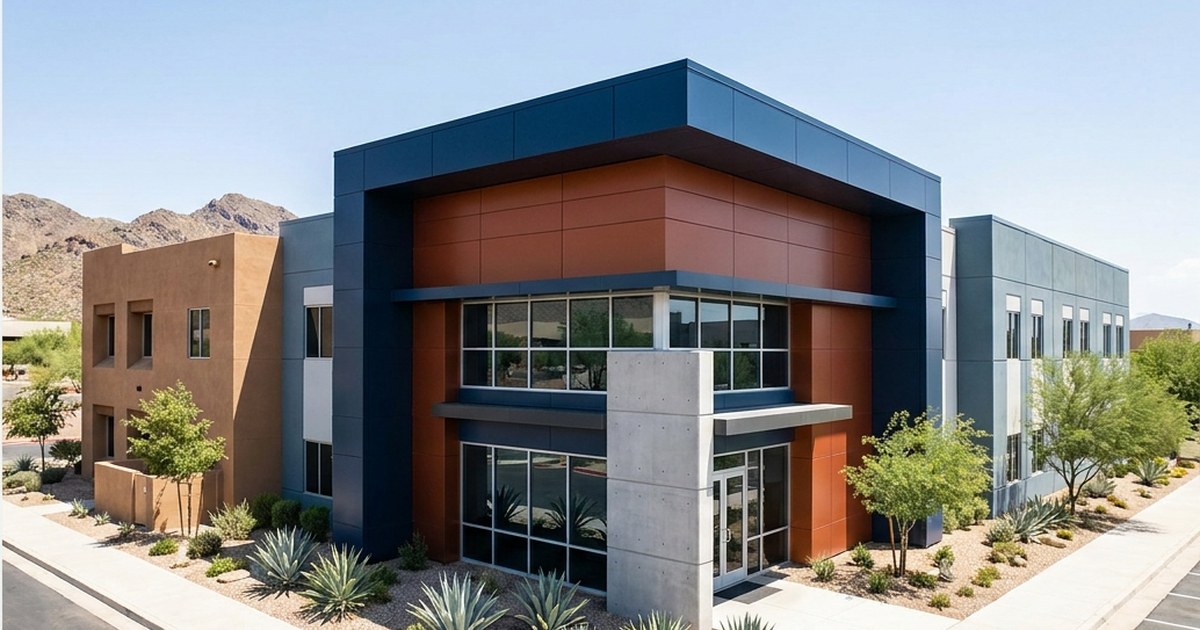
When your business outgrows its footprint, the question isn't whether to expand. It's how to do it without losing months to coordination, permitting delays, and subcontractor finger-pointing. A commercial addition contractor designs, permits, and constructs building expansions for offices, retail spaces, warehouses, and multifamily properties. In Arizona, the best contractors handle the full scope in-house: architecture coordination, city and county permitting, structural and finish construction, and final inspection under one contract and one warranty. For property managers and business owners in the East Valley, this eliminates subcontractor coordination, reduces timeline risk, and ensures one accountable point of contact from concept to ribbon-cutting. Expect 3–9 months from signed contract to completion, depending on square footage, structural complexity, and permitting jurisdiction.
The difference between a smooth Commercial General Contractor in Phoenix, AZ expansion and a six-month coordination nightmare comes down to one decision: hiring a commercial addition contractor who owns the entire process or managing five subcontractors yourself.
A commercial addition contractor delivers square footage when your business needs it. The role spans architecture coordination, permitting with city or county building departments, structural construction, mechanical and electrical systems integration, interior build-out, and final inspection sign-off. What separates full-service contractors from general contractors who broker work is accountability. When design, permitting, framing, and finish trades operate under separate contracts, nobody owns the schedule. When one team handles every phase, delays and miscommunications disappear.
Property managers across Chandler, Gilbert, and Mesa choose full-service contractors because their buildings stay operational during construction. A Tenant Improvement Contractor in Phoenix, AZ coordinates work around lease schedules. A warehouse expansion gets phased so fulfillment never stops. A retail building addition happens during off-season so peak revenue windows stay clear.
LJ Builders brings design coordination, permitting experience across East Valley jurisdictions, structural and finish construction, and custom build-outs under one contract. When a permitting issue surfaces in Mesa, the same team who submitted the plans resolves it. When an HVAC tie-in requires coordination with your property engineer, one project manager handles both sides. No hand-offs, no gaps, one 2-year warranty covering the entire scope.
Commercial additions solve specific operational constraints. Each scenario shares a common driver: the cost and disruption of relocating exceeds the investment in expanding the current footprint.
Office additions accommodate growing teams without sacrificing collaboration zones. A 1,500-square-foot commercial construction expansion delivers six private offices, two conference rooms, and a breakout area. For professional services firms in Scottsdale and Phoenix, that costs less than leasing satellite space and keeps teams under one roof.
Retail expansions turn seasonal inventory constraints into year-round capacity. A 2,000-square-foot addition on a Queen Creek retail property added dedicated storage, a customer service desk, and expanded product displays. The owner avoided relocating during peak season and maintained customer traffic.
Warehouse and industrial additions respond to fulfillment volume. A 5,000-square-foot building addition in Mesa created dedicated equipment zones and expanded dock capacity. The project phased construction so operations never stopped.
Multifamily amenity buildings drive tenant retention and premium rents. HOA & Property Management Construction Services in Phoenix, AZ teams understand the resident communication and phasing requirements these projects demand. Property managers add fitness centers, leasing offices, and clubhouses to compete with newer developments. These additions typically deliver 1,000–2,500 square feet of dedicated amenity space.
Restaurant and hospitality expansions convert unused outdoor space into revenue-generating square footage. Covered patio enclosures in Phoenix and Scottsdale add seating capacity without the cost or timeline of relocating. A 600-square-foot enclosed patio addition delivers 20–30 additional covers per service.
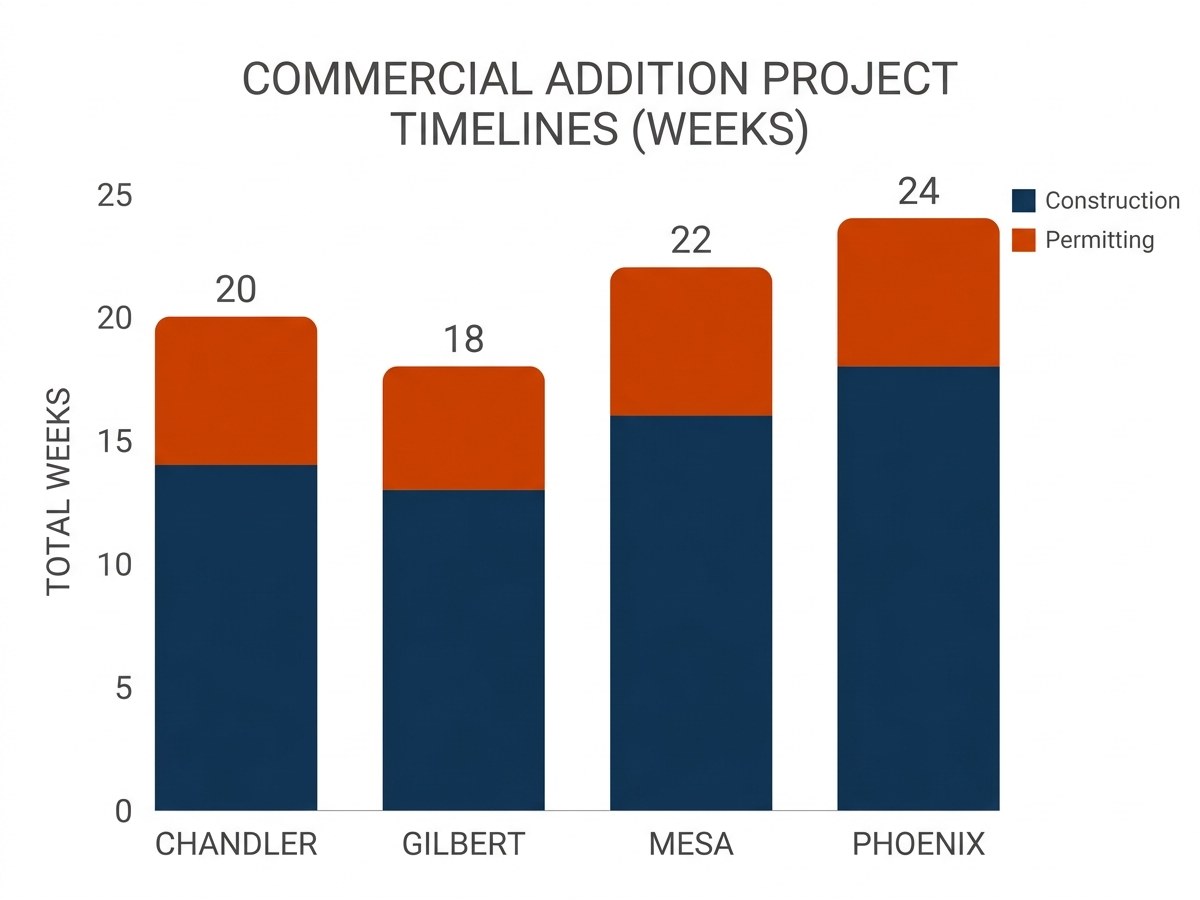
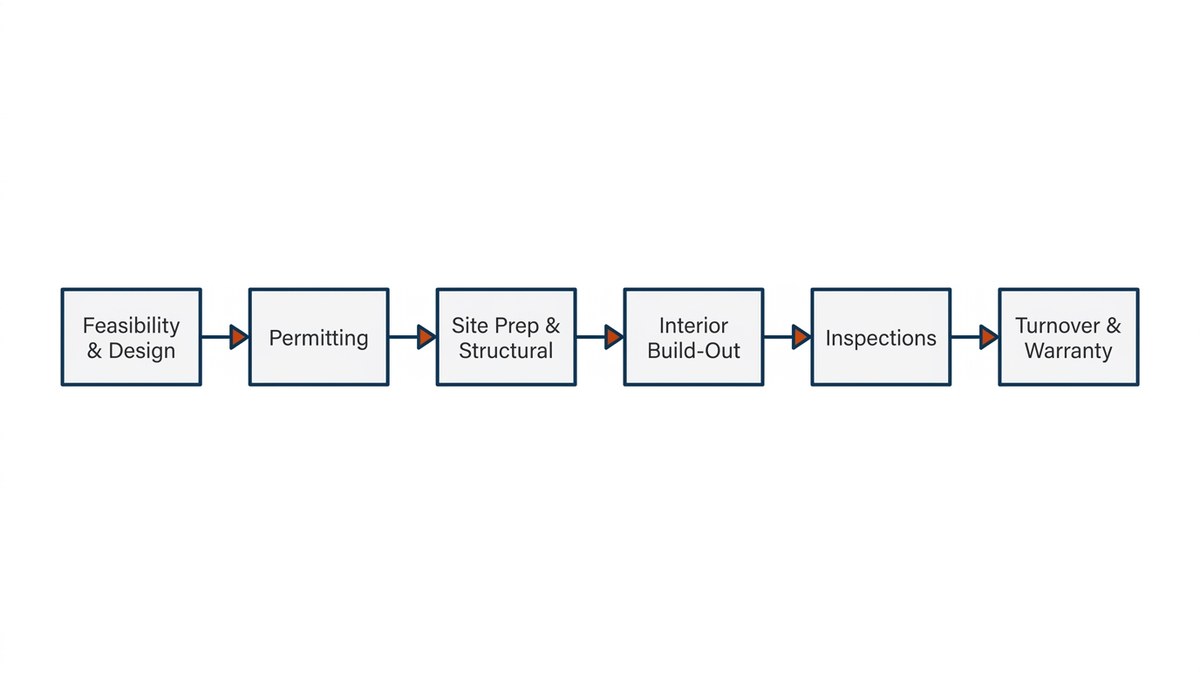
Commercial addition projects follow a six-phase process. Timeline expectations depend on square footage, structural complexity, and permitting jurisdiction. A straightforward 1,500-square-foot office addition in Chandler clears permitting and construction in four to five months. A 5,000-square-foot warehouse expansion with complex structural tie-ins can extend to nine months.
The commercial addition contractor evaluates site conditions, zoning compliance, and structural feasibility. This phase includes preliminary architectural coordination (if an architect isn't already engaged), budget scoping, and utility capacity assessment. A property survey confirms setback compliance. Structural engineers evaluate foundation requirements and load-bearing capacity for roof tie-ins. Expect two to three weeks for feasibility analysis on standard projects.
Permitting timelines vary by jurisdiction. In our work with property managers across the East Valley, permitting in Chandler typically clears in six to eight weeks for straightforward additions, while Mesa and Phoenix can extend to 10–12 weeks depending on plan-review backlog. Fire code compliance, structural plan reviews, and mechanical, electrical, and plumbing (MEP) approvals all run in parallel. A commercial addition contractor with jurisdiction-specific permitting experience accelerates this phase.
Foundation work begins after permit approval. This phase includes excavation, concrete footings, slab or pier foundations (depending on soil conditions and load requirements), and steel or wood framing. Roofing tie-ins connect the addition to the existing structure. Utility extensions run concurrently: water, sewer, electrical service upgrades, gas lines. Structural inspections occur at foundation, framing, and roofing stages. Expect four to six weeks for a 2,000-square-foot addition with standard structural requirements.
Once the shell passes rough inspection, interior trades begin. Drywall, insulation, HVAC ductwork, electrical rough-in, and plumbing rough-in happen in sequence. Finish carpentry, cabinetry (if applicable), flooring, paint, and fixture installation follow. Commercial-grade finishes distinguish commercial build-outs from residential work: fire-rated drywall, commercial HVAC systems, and ADA-compliant fixtures per federal accessibility standards. This phase typically requires six to eight weeks for standard office or retail interiors.
Each trade undergoes inspection: structural framing, electrical rough and final, plumbing rough and final, mechanical systems, fire safety, and final building inspection. The commercial addition contractor coordinates inspection scheduling and resolves deficiencies flagged during reviews. A contractor who self-performs trades (rather than brokering subcontractors) resolves deficiencies faster because the same crew returns for corrections.
After final inspection approval, the contractor conducts a punch-list walkthrough with the property owner or manager. Outstanding finish items get closed out within one to two weeks. The building department issues an occupancy certificate. The contractor provides warranty documentation. Industry standard is a one-year workmanship warranty. LJ Builders provides a two-year workmanship warranty, covering both labor and materials on the scope delivered.
Evaluating contractors requires looking past marketing claims and examining operational capability. Five criteria separate full-service contractors from brokers who coordinate subcontractors.
In-house capability versus subcontractor coordination. Does the contractor self-perform framing, finish carpentry, and project management, or do they broker every trade? When something goes wrong during construction, who's accountable? A contractor who self-performs major trades owns the schedule and the quality outcome.
Permitting experience in your jurisdiction. Ask for recent projects in Chandler, Gilbert, Mesa, Queen Creek, Scottsdale, or Phoenix. A commercial addition contractor who's pulled permits in your city knows the building department's review process, understands local code interpretations, and has relationships with plan reviewers. That familiarity shaves weeks off permitting timelines.
Warranty terms. Industry standard is a one-year workmanship warranty covering defects in labor and materials installed by the contractor. A two-year warranty signals confidence in execution and willingness to stand behind the work long-term. Ask what's covered and what's excluded. Manufacturer warranties on equipment (HVAC, roofing materials) run separately from workmanship coverage.
Commercial portfolio and named references. Request a portfolio showing recent commercial additions with square footage, project timelines, and client names. Call those clients. Ask about communication, change-order transparency, and how the contractor handled unexpected issues. Verify the contractor's Arizona Registrar of Contractors (ROC) license and check complaint history.
Timeline realism. A commercial addition contractor who promises 90 days for a 2,000-square-foot addition has either never pulled a permit in Arizona or is setting expectations they can't meet. Honest contractors cite permitting timelines by jurisdiction, explain where delays typically occur (plan reviews, structural inspections, MEP coordination), and provide contingency buffers.
The decision to expand versus relocate hinges on cost per square foot, operational disruption, and revenue impact. Commercial additions in Arizona typically cost $150–$250 per square foot depending on structural complexity, finishes, and MEP requirements. Relocating to a larger space incurs tenant improvement costs, moving expenses, downtime, and potential customer or tenant loss during transition.
Cost comparison. A 2,000-square-foot office addition at $200 per square foot costs $400,000. Leasing an additional 2,000 square feet in the East Valley runs $18–$28 per square foot annually ($36,000–$56,000 per year). Over a 10-year hold period, the lease costs $360,000–$560,000 with zero equity gained. The addition builds owned square footage with tax-deductible depreciation on building improvements.
Revenue upside. For retail and restaurant operators, every additional square foot generates measurable revenue. A 600-square-foot patio enclosure adds 25 seats. At two turns per night and $40 average check, that's $2,000 additional revenue per night or $60,000 per month in a high-traffic location. The addition pays for itself in under 12 months.
Tenant retention. Multifamily properties with modern amenity buildings achieve higher lease renewal rates and command rent premiums. A 1,500-square-foot fitness center and clubhouse addition can justify $50–$100 per unit per month in rent increases across a 100-unit property. That's $60,000–$120,000 additional annual revenue, recovering the addition cost in three to five years while reducing turnover expenses.
A realistic evaluation starts with a feasibility analysis. Can your site accommodate the addition within zoning setbacks? Does soil capacity support the foundation load? Can utility services scale without major infrastructure upgrades? A qualified commercial addition contractor answers these questions during the first site visit.
Property managers and business owners across Chandler, Gilbert, Mesa, Queen Creek, Scottsdale, and Phoenix choose LJ Builders because they need one accountable team, not a coordination project. Every commercial addition runs under a single contract with design coordination, permitting, construction, and warranty delivered in-house.
Lawrence and Jessica Johnson personally oversee every project. That owner-led accountability means the person who scopes your addition, estimates the timeline, and signs the contract is the same person managing the crew on-site. ROC #332589 carries 20+ years of clean compliance history because honesty and transparent communication have driven every estimate and change order since day one.
The two-year workmanship warranty (double the industry standard) reflects confidence in execution. When other contractors deliver one-year coverage and walk away, LJ Builders stands behind both new work and corrections for 24 months. That warranty covers labor and materials on the full scope: framing, finishes, MEP systems, and custom build-outs.
Named referral partners include GreyStar, FSR, and CCMC. Property management firms trust LJ Builders with tenant improvements, additions, and ground-up builds because operational timelines matter. When a property manager needs an amenity building completed before lease-renewal season, the project gets delivered on schedule.
The commercial portfolio spans tenant improvements, building additions, casitas, and ground-up construction. Every project demonstrates the same full-service capability: design coordination with architects, jurisdiction-specific permitting, self-performed structural and finish trades, and final inspection coordination. Residential Construction & Remodeling Services in Phoenix, AZ also benefit from this same integrated approach when homeowners need additions or major remodels that require similar permitting and structural expertise.
Contact LJ Builders | Free Construction Estimate to request a detailed scope, fixed price, and realistic timeline within 48 hours. LJ Builders delivers commercial additions across Chandler, Gilbert, Mesa, Queen Creek, Scottsdale, and Phoenix with the same owner-led accountability and two-year warranty that property managers rely on for tenant improvements and ground-up builds.
Remodeling
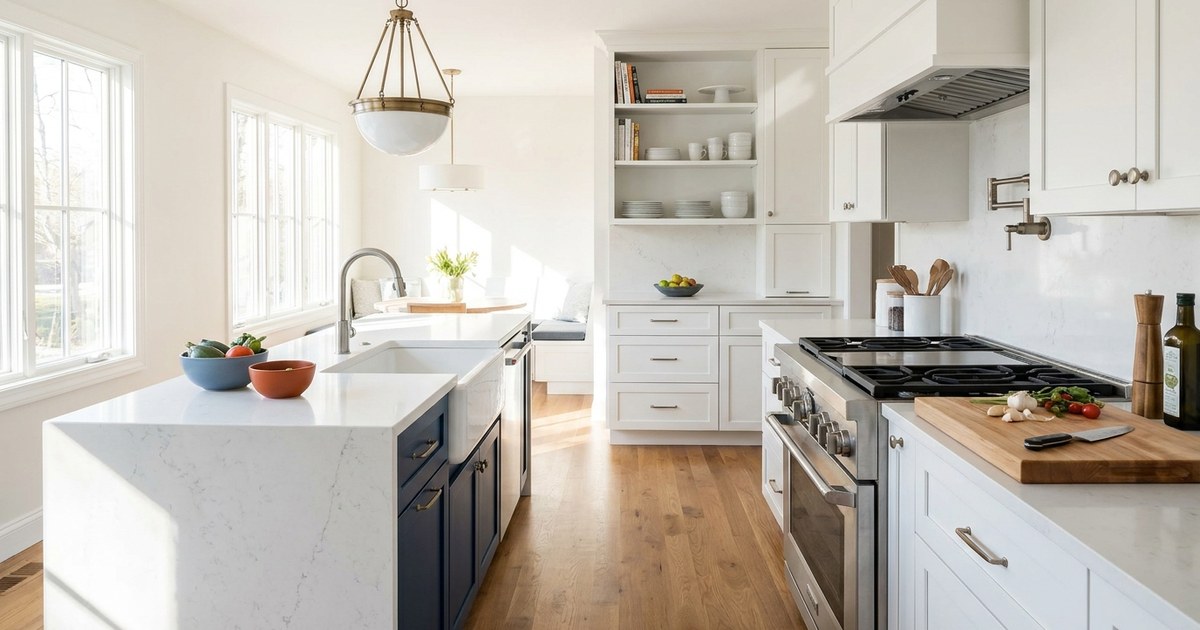
LJ Builders handles every phase of custom kitchen design in-house: consultation, permitting, construction, and cabinetry installation. One owner-led team eliminates subcontractor hand-offs and timeline surprises, backed by a 2-year workmanship warranty that doubles the industry standard.

Remodeling
A kitchen renovation contractor in Gilbert should provide in-house design, permitting, construction, and cabinetry under one accountable team. LJ Builders delivers owner-led projects backed by a two-year workmanship warranty, transparent pricing, and 20-plus years of East Valley expertise.
Commercial
When a tenant improvement project goes sideways, the property manager takes the heat. This guide walks through the vetting framework property managers, architects, and HOA boards use to separate capable commercial contractors from coordinators who overpromise and underdeliver.