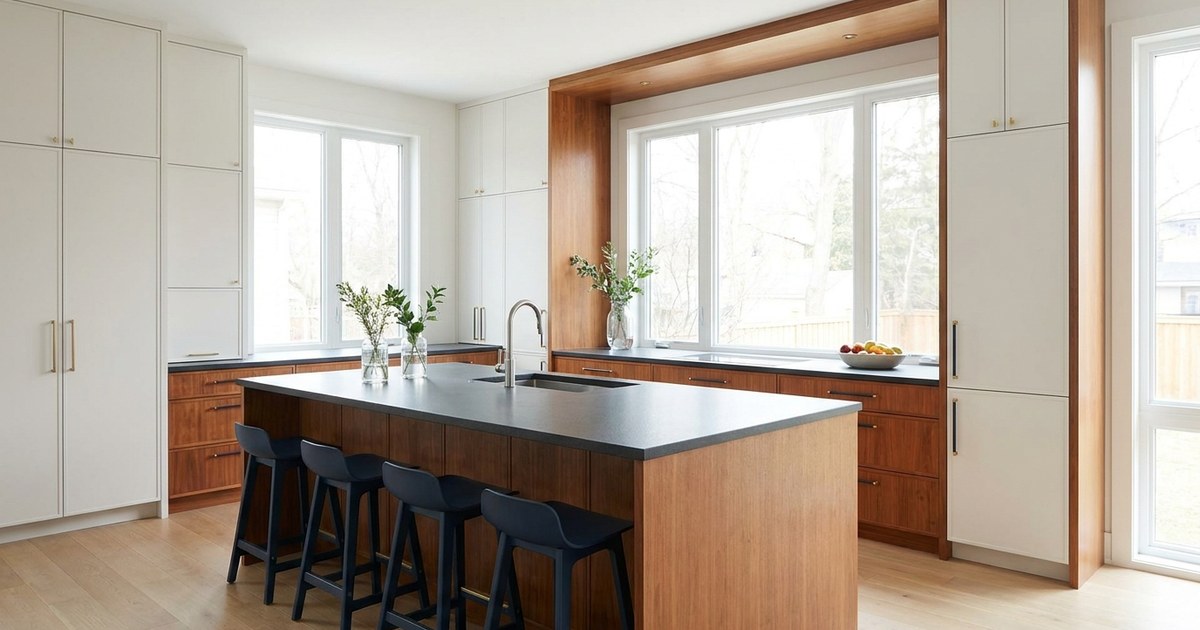
Custom kitchen cabinets in Arizona are built to exact specifications for your space, unlike stock or semi-custom options. Homeowners choose materials (solid wood, plywood, MDF), door styles, finishes, and internal configurations. Installation by a licensed contractor ensures precision fit, proper anchoring for Arizona's climate, and integration with countertops and appliances. Full-service teams handle design, permitting, and installation under one contract.
When you've decided custom kitchen cabinetry is the right investment for your kitchen, three decisions shape the outcome: what you design, what materials you choose, and who installs the work. Each decision affects durability, cost, and how well the finished kitchen serves your household for the next 20 years. This guide explains what Arizona homeowners in Gilbert, Chandler, and the East Valley need to know about Custom Kitchen Design by LJ Builders: From Concept to Completion, the materials that perform in the local climate, and why installation quality determines whether your warranty protects you or not.
Custom kitchen cabinets are built to your exact measurements, material preferences, and design specifications. Stock cabinets come in fixed sizes and finishes; semi-custom offers limited modifications. Custom gives you complete control over wood species, door style, interior layout, and hardware, making them ideal for unique spaces or specific design visions.
Stock cabinets arrive pre-made in standard widths (12", 18", 24", 30", 36"). You select from a catalog of finishes and door styles, then fill gaps with filler strips. Semi-custom cabinets let you adjust depth or modify drawer configurations within the manufacturer's options. Custom cabinets eliminate those constraints. The cabinet maker builds boxes, doors, and drawers to your kitchen's exact dimensions.
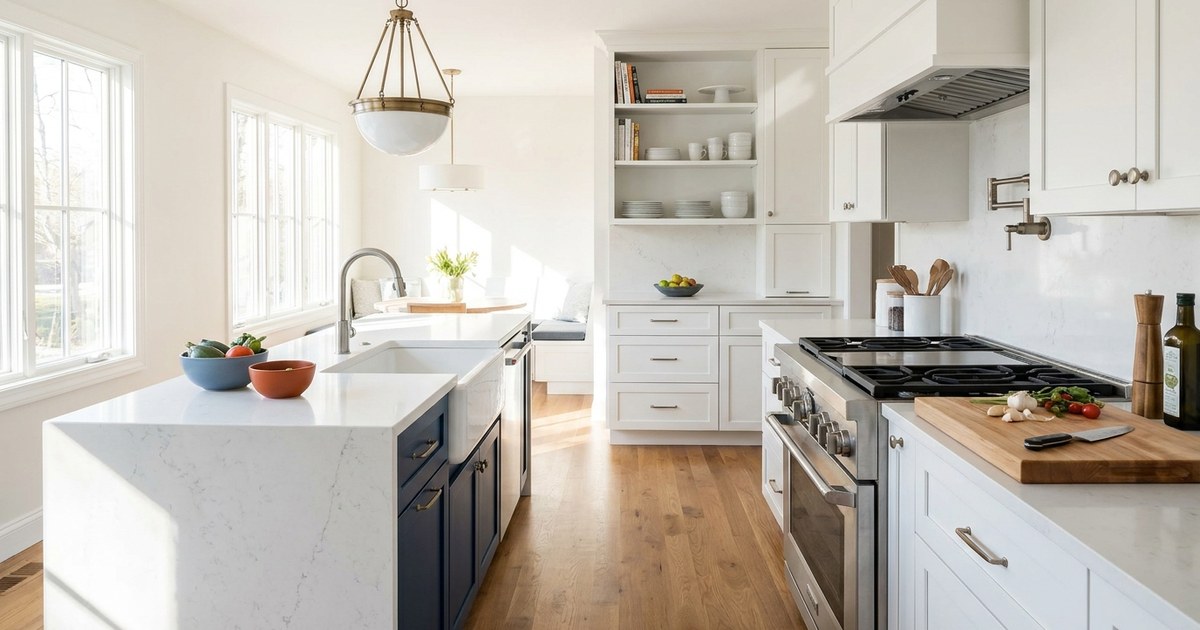
Custom makes sense when your kitchen has non-standard ceiling heights, angled walls, or when you want pull-out spice racks in exact widths, deep drawers sized for your cookware, or corner solutions that don't waste storage. Homeowners in master-planned communities like Agritopia and Power Ranch often choose custom kitchen cabinetry as the centerpiece of a full Kitchen Renovation Contractor in Gilbert, AZ: Transform Your Space to match the home's architecture and their cooking habits.
The custom cabinetry market continues to grow as homeowners prioritize personalized storage solutions. Appraisers recognize quality materials and functional design. Poorly installed custom cabinets hold less value than well-installed semi-custom, which is why the contractor you choose matters as much as the cabinetry itself.
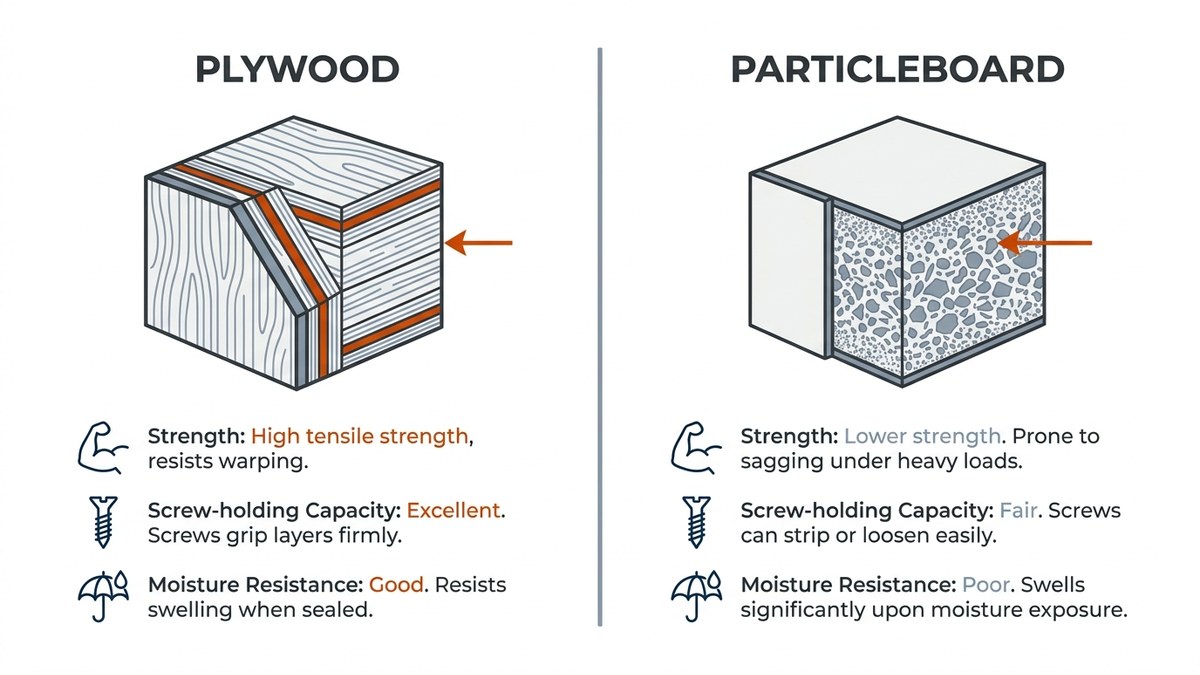
Solid hardwoods (maple, oak, cherry) offer durability and traditional aesthetics. Plywood provides strength and resists Arizona's heat and low humidity better than particleboard. MDF works for painted finishes. Cabinet boxes in plywood with solid-wood doors and frames balance cost, performance, and longevity in Arizona's climate.
Solid hardwood doors and face frames bring warmth and character. Maple resists dents and takes stain evenly. Oak shows prominent grain patterns and ages well. Cherry darkens over time, developing a rich patina. These woods perform in Arizona's dry climate when properly sealed.
Cabinet boxes built from plywood hold screws better, resist moisture, and withstand thermal expansion. Particleboard can swell if exposed to leaks and may not hold hinges securely over decades. Industry analysis shows plywood maintains dimensional stability better than particleboard in low-humidity environments like Arizona.
LJ Builders works with Procraft Cabinetry and HCI for custom kitchen cabinets in Arizona across the East Valley. Both shops build boxes from 3/4-inch plywood with solid-wood face frames, dovetailed drawer boxes, and soft-close hardware.
Medium-density fiberboard (MDF) accepts paint smoothly. It has no grain to show through the finish and machines to crisp edges. For painted cabinets (white, gray, navy), MDF doors paired with plywood boxes deliver a smooth finish at lower cost than solid hardwood.
Arizona's heat and low humidity cause wood to contract. Contractors experienced in Arizona kitchens specify kiln-dried hardwoods, moisture-resistant plywood, and finishes with UV inhibitors to prevent sun damage. They ensure cabinet boxes are anchored to studs with hardware rated for thermal movement. Smart Storage Solutions for Your Custom Kitchen Design work only when the cabinet structure stays square and hinges stay tight.
Design starts with measuring your kitchen and reviewing your functional needs (storage types, appliance placement, traffic flow). The contractor provides layout options, material samples, and door-style mockups. You approve drawings and finishes before fabrication. Design, permitting, and installation happen under one contract when you work with a full-service team.
The contractor measures wall lengths, ceiling height, window and door locations, and existing plumbing and electrical rough-ins. They document soffits, angled walls, and obstacles. Measurements must account for wall irregularities because custom cabinets are built to the exact dimensions recorded.
During this consultation, you describe how you cook, how many people use the kitchen, what you store, and what frustrates you about your current layout.
The contractor presents two or three layout options. One may maximize storage with floor-to-ceiling cabinets. Another may prioritize open shelving and glass-front uppers. A third might add a butler's pantry or coffee station. Each option shows cabinet placement, appliance locations, and traffic patterns.
You review wood species, door styles (shaker, flat-panel, raised-panel, glass-insert), finish options (stain, paint, two-tone combinations), and hardware (knobs, pulls, concealed hinges). The contractor provides samples you can view in your kitchen's lighting.
Once you approve the layout, materials, and finishes, the contractor generates detailed drawings showing cabinet dimensions, hinge locations, cutouts for plumbing and electrical, and integration points for countertops and backsplash. You sign off before fabrication begins.
Permits are required when custom cabinets involve structural changes. Full-service contractors handle permitting as part of the contract. For more on what to ask before signing a contract, see Kitchen Remodel Contractor in Chandler, AZ: Styles, Costs, and Process.
Professional installation ensures cabinets are level, securely anchored to studs, and properly aligned with countertops and appliances. Installers account for wall irregularities, plumbing, and electrical. Poor installation voids warranties, causes door misalignment, and risks structural failure. Licensed contractors provide written warranties covering workmanship, not just materials.
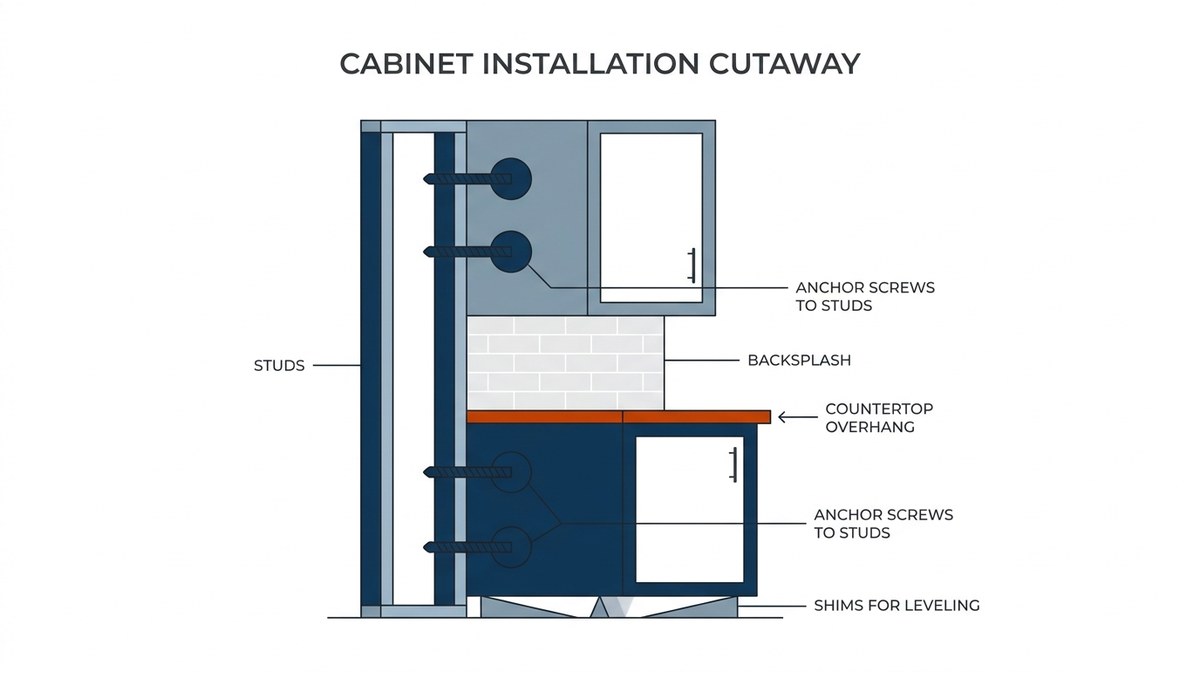
Installers locate studs and anchor upper cabinets with screws long enough to reach framing, not just drywall. They shim base cabinets to achieve level across uneven floors. Cabinets that aren't level cause doors to swing open, drawers to bind, and countertops to crack at seams.
In Arizona, where concrete slab foundations and tile floors are common, shimming requires precision. A floor that slopes 1/4 inch over 10 feet will twist a cabinet run if not corrected during installation.
Installers ensure upper cabinets are positioned so the countertop overhang doesn't interfere with door swing. They leave gaps for appliances that account for the appliance's actual dimensions plus clearance for connections and ventilation. They coordinate with the countertop fabricator so seams land on cabinet supports.
Cabinet manufacturers warranty their materials (wood, hinges, drawer slides) against defects. They do not warranty installation. If cabinets pull away from the wall, the manufacturer will not cover the repair. The installer is responsible.
Licensed contractors in Arizona carry general liability insurance and provide written workmanship warranties. LJ Builders provides a two-year workmanship warranty covering installation failures like sagging shelves, misaligned doors, and hinge pull-out.
Homeowners who hire unlicensed installers void the cabinet manufacturer's warranty and have no recourse if the installation fails. For guidance on vetting contractors, see Kitchen Contractor in Phoenix: What Homeowners Should Ask Before Hiring.
Custom kitchen cabinets in Arizona typically cost $15,000 to $40,000+ depending on materials, size, and complexity. Solid hardwoods and specialty finishes increase cost. Larger kitchens, islands, and pull-out organizers add to the total. Installation and design services are usually separate line items. Full-service contractors provide fixed-price estimates covering design, materials, and installation.
Maple cabinets with a natural stain cost less per linear foot than cherry with a custom color match. Painted finishes on MDF doors cost less than stained solid wood. Market research indicates specialty finishes like distressed, glazed, or two-tone add labor and material cost. Hardware can add $1,000–$3,000 to the total.
A 10-foot run of base cabinets with standard drawers costs less than the same run with pull-out pantries, spice racks, and corner lazy Susans. Islands add cost because they require finished ends, seating overhangs, and sometimes separate electrical or plumbing rough-ins.
Kitchens in the 200–300 square foot range with a 12–15 linear foot cabinet run, an island, and mid-range materials land in the $20,000–$30,000 range for cabinets and installation. Larger kitchens or high-end materials push the total above $40,000.
Full-service contractors provide line-item estimates showing design fees, materials (cabinet boxes, doors, hardware), installation labor, and permitting costs. The estimate includes a scope of work, a timeline, and payment terms.
Fixed-price estimates eliminate surprises. The contractor absorbs cost overruns if fabrication takes longer than expected. Homeowners know the total cost before signing a contract. For budget context within a full kitchen remodel, see Kitchen Remodeling in Chandler, AZ.
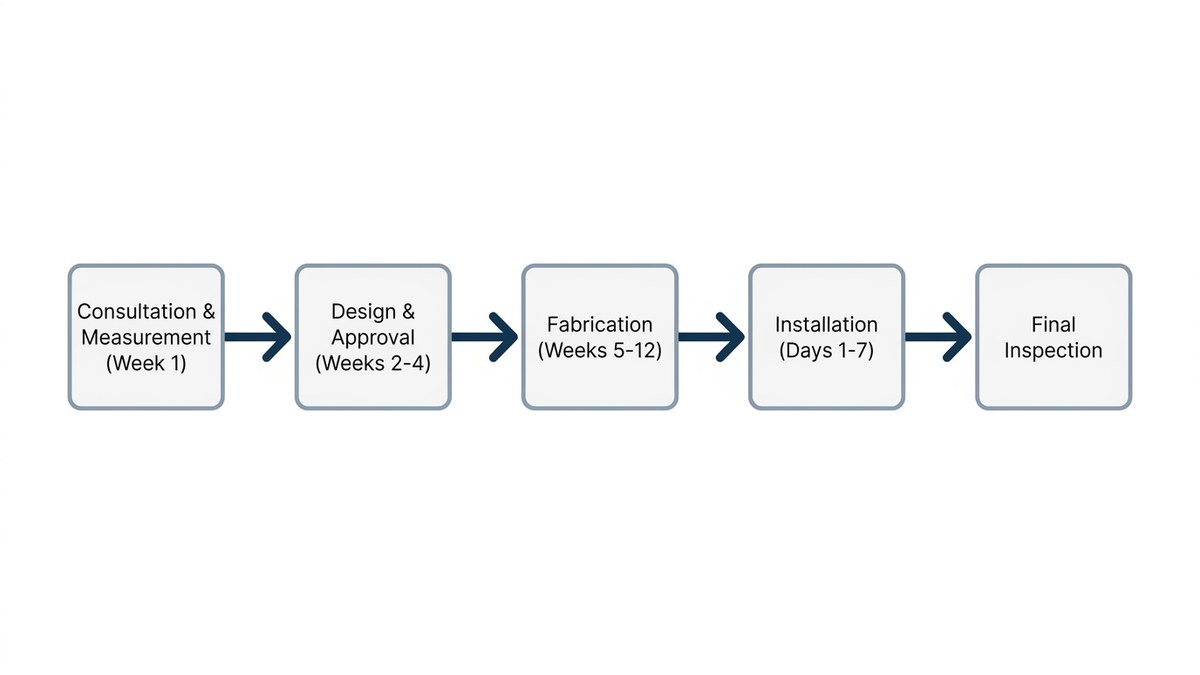
Design and approval take 2–4 weeks. Fabrication requires 4–8 weeks depending on material availability and shop workload. Installation takes 3–7 days for most kitchens. Total timeline: 8–14 weeks from initial consultation to completed installation. Full-service contractors manage the entire schedule, eliminating coordination delays between designers, fabricators, and installers.
Design timelines depend on how quickly you make decisions. Homeowners who approve layouts and finishes in one or two meetings move faster than those who request multiple revisions. According to industry forecasts, contractors provide realistic timelines based on current workload and cabinet shop lead time.
Installation for a typical kitchen (12–15 linear feet of cabinets plus an island) takes three to five days. Day one: remove old cabinets, prep walls, verify plumbing and electrical rough-ins. Days two and three: install base cabinets, shim for level, anchor to studs, install uppers. Days four and five: install doors, drawers, hardware, and integrate with countertops.
Full-service contractors manage the schedule so custom kitchen cabinetry arrives when the kitchen is ready. When one team handles design, permitting, demolition, rough-in, cabinetry, and finish work, there are no handoff delays. Issues get resolved in real time, not through phone calls between three separate vendors. Our custom cabinetry page is on the way.
Custom kitchen cabinets in Arizona require three decisions: what you design, what materials you specify, and who installs the work. Homeowners who understand the difference between stock, semi-custom, and fully custom options can make confident choices about layout, storage, and finishes. Materials matter. Plywood boxes with solid-wood doors perform better in Arizona's climate than particleboard alternatives. Professional installation by a licensed contractor protects your investment with proper anchoring, precise alignment, and a written workmanship warranty.
Full-service contractors simplify the process by handling design, permitting, fabrication coordination, and installation under one contract. You work with one team from initial consultation to final inspection. One point of contact. One warranty. No coordination delays between separate designers, cabinet shops, and installers.
LJ Builders provides full-service custom kitchen design, cabinetry, and installation across Chandler, Gilbert, and the Kitchen Remodeling in East Valley, AZ. Our in-house team handles design, permitting, construction, and cabinetry under one contract, backed by a 2-year workmanship warranty. Get a Free Estimate to discuss your project.

Remodeling
Before hiring a kitchen contractor in Phoenix, ask for their ROC license number, proof of insurance, references from recent projects, a detailed written estimate with timeline, and their warranty terms. A qualified contractor will answer every question in writing and explain their permitting and design process upfront. Learn the six questions that protect your investment and how to spot red flags before you sign.
Remodeling
LJ Builders handles every phase of custom kitchen design in-house: consultation, permitting, construction, and cabinetry installation. One owner-led team eliminates subcontractor hand-offs and timeline surprises, backed by a 2-year workmanship warranty that doubles the industry standard.

Remodeling
A kitchen renovation contractor in Gilbert should provide in-house design, permitting, construction, and cabinetry under one accountable team. LJ Builders delivers owner-led projects backed by a two-year workmanship warranty, transparent pricing, and 20-plus years of East Valley expertise.