The water is stopped, or the fire is out. Now the walls are damaged, the adjuster wants paperwork, and nobody owns the whole job.
What is insurance restoration in Arizona? Insurance restoration in Arizona means one contractor documents the damage, works through the scope with your insurer, and rebuilds the property. At LJ Builders, we assess damage within 48 hours, coordinate the claim, and handle the reconstruction under a 2-year workmanship warranty. You deal with one team and decide whether to sign.
Many owners describe the same problem. One company talks to the insurer. Another quotes the repair. Nobody is accountable for the full result. This guide covers insurance restoration Arizona owners and property managers face after fire, smoke or water loss. It explains who does what, what to do first, and how to pick one accountable team. If fire caused your loss, our fire damage restoration guide goes deeper on emergency response and reconstruction.
One note up front. Coverage and payment depend on your policy and your insurer. No contractor can promise a claim outcome.
Insurance restoration is repair work after fire, smoke, water or structural damage that an insurance claim pays for. A restoration contractor records the damage, supports the claim with that record, and rebuilds once the scope is agreed. The insurer decides coverage and payment. The contractor does the work.
The process runs in four stages:

Fire, smoke and water losses follow the same logic. The details change, but the order does not. You can read how smoke damage is assessed and repaired for the fire-side version of these stages.
Insurance claim restoration works best when the same team that records the damage also plans the repair. Nothing gets lost between steps. That is how we run every insurance restoration Arizona project.
Takeaway: The four stages stay the same for every type of loss, and the insurer decides coverage while the contractor does the work.
You file the claim with your insurer, and the insurer decides coverage. A coordinating contractor supplies the damage record, works through scope with the insurer, and does the rebuild. We handle this claim coordination through our restoration partnership with Dash.
Here is our point of view. In our process, the assessment record does two jobs. It supports the claim, and it feeds the repair scope. We walk the property, record the fire, smoke and water damage, and note what the structure needs. The insurer sees what we see, and the crew builds from the same notes.
That is why we argue for one team. When one company talks to the insurer and another quotes the repair, the two documents can drift apart. Questions go back and forth, and nobody owns the answer. When we coordinate the claim and do the reconstruction, you deal with one team.
Some owners worry that a contractor who handles the claim will take control or push upsells. Our answer is direct. You stay in control of the decision to sign. Lawrence and Jessica review every inquiry personally. There is no call center and no upsell. We also do not promise a repair date before we have seen the property.
Larger or multi-unit losses need more planning. Our post on who to trust with complex commercial projects in Phoenix covers that side.
Takeaway: You file, the insurer decides, and one coordinating contractor keeps the record and the rebuild together.
Stop the source if it is safe. Stay away from wet or fire-touched wiring, take photos and video of every affected room, and call a licensed contractor for an assessment. Do not tear out finishes or clean soot before the damage is recorded.
Here is the short list:
Skipping the last two steps is the most common mistake. Removing damaged material feels like progress. But once it is gone, the record is gone too, and your insurer may have less to work from.
Our guide to water damage restoration contractors in Phoenix and what fast response looks like walks through the water-specific steps in more detail.
Takeaway: Make it safe, record everything, and wait to demolish until the damage is documented.
Property managers carry extra tasks. Notify the building owner, tell tenants in writing what happened and who their single contact is, and record every affected unit. One accountable contractor keeps those records and the repair scope in one place.
You are responsible for an asset that belongs to someone else, and tenants live in it. Three habits help:
If the contractor keeps the unit records, the claim file and the repair plan match. Our commercial contractor services for property managers are built around that single point of contact, including the insurance restoration Arizona buildings need after a loss.
Property managers often tell us they cannot wait on a vague repair date. We agree. Fast, for us, means a 48-hour assessment and an honest answer. It does not mean a repair date made up on the phone. We will not promise a timeline before we have walked the property.
Takeaway: A single contact, written tenant notices and a unit-by-unit record keep a managed property under control.
Ask who your single point of contact is, who is licensed for each part of the work, how scope changes are priced and approved in writing, and what warranty covers the repair. Prefer one team over a chain of subcontractors.
A contractor offering insurance restoration Arizona owners can rely on should answer all four questions plainly and in writing. If the answers are vague, treat that as information.
Here is how we answer them:
That last point matters if a first contractor left your job unfinished. We also take over stalled projects. Tell us what happened, and we will walk the property and say what we find.
Our East Valley roots help too. We know Arizona construction, from material durability to climate. For the bigger picture, read why in-house trades beat fragmented subcontractors.
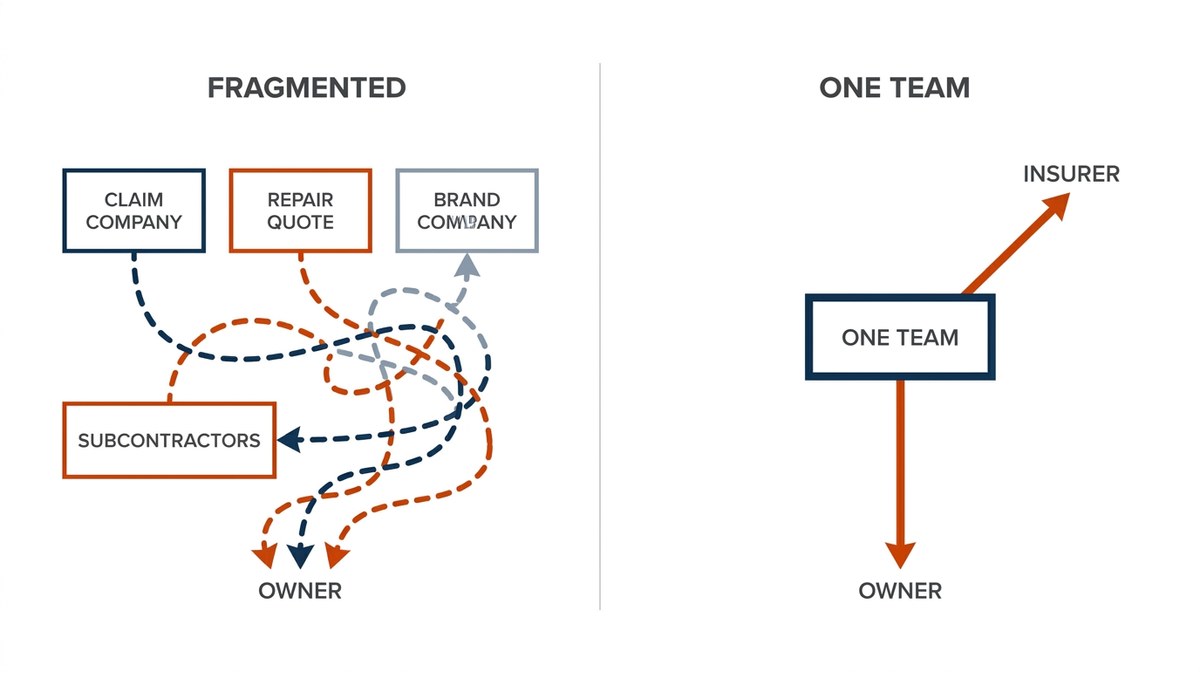
Takeaway: Choose the team that answers all four questions in writing and stands behind the work for two years.
You get one point of contact, a 48-hour assessment, a record that serves both the claim and the repair, and a 2-year workmanship warranty. You also get an honest timeline and no pressure. The insurer still decides coverage, and you still decide whether to sign.
If you need insurance restoration Arizona owners can count on, in Chandler, Gilbert or anywhere in the East Valley and Phoenix area, we are glad to look at the property and give you a straight answer.
Tell Lawrence and Jessica about your property. They review every inquiry personally and respond within 24 hours.

Commercial
A suite that looks ready on a tour can still hide plumbing, power and landlord problems. This guide covers layout, code, coordination and schedule, so your practice settles them before construction starts and keeps its opening date.

Commercial
A clubhouse or common area project succeeds or fails on coordination, not construction. This guide shows Phoenix HOA boards and property managers how to scope the work, compare written bids, protect resident access, and decide between one general contractor and separate trades.

Restoration
Smoke reaches walls, wiring and finishes together, so the repair rarely stays in one trade. This guide walks East Valley owners and property managers through the assessment, the insurance claim and the rebuild, in plain terms.