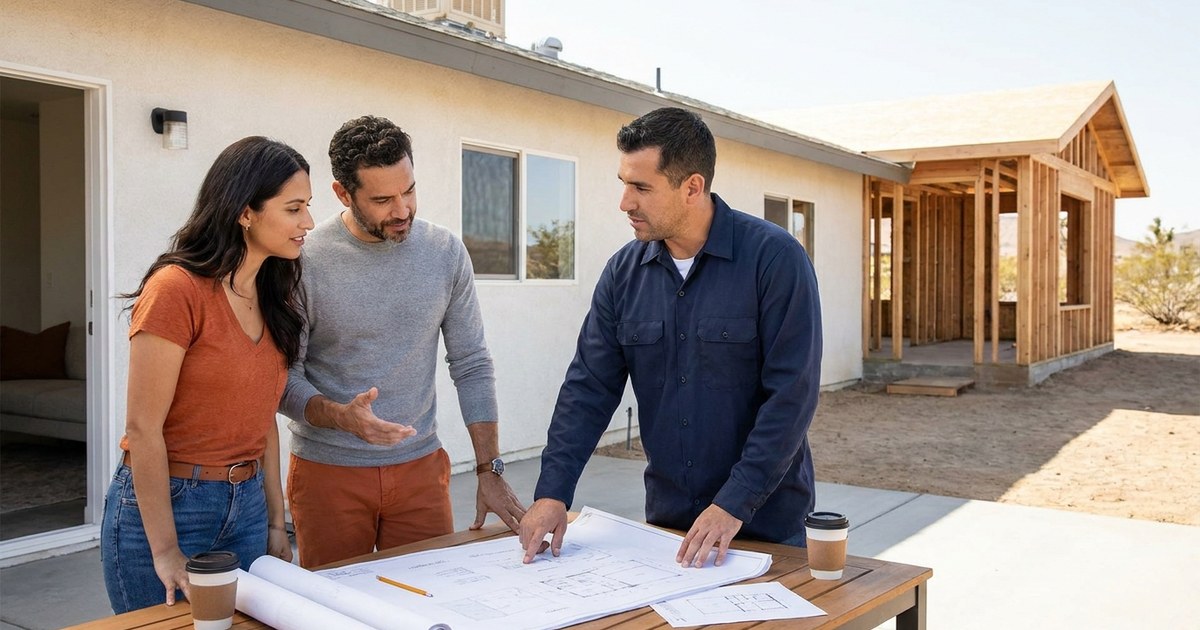
What is the best way to find an addition architect and contractor?
To find an addition architect contractor, decide first whether you want two separate firms or one design-build team. Separate firms mean you coordinate between them. A design-build team handles design, permits and construction together, so you get one contact, one schedule and one warranty. Ask for a license number and the warranty in writing.
You want more room. You do not want a second job coordinating people.
In our work with homeowners, many have heard a story about a contractor who stopped returning calls. Some have lived one. They want one accountable team, not a chain of subcontractors where nobody owns a problem.
This guide helps you pick your hiring model first, then check the people behind it. We are LJ Builders, an owner-led, full-service contractor. Our home addition services give you a yardstick for comparing any firm. The short version: one accountable team beats a chain of handoffs.
Start by choosing your model: separate architect and builder, or one design-build team. Then verify the license, ask who answers the phone when something goes wrong, and get the scope, price and warranty in writing before you sign anything.
Most guides skip the first step, so try this quick test. Ask yourself three questions:
If you answered no, then yes, then yes, a design-build team fits you. If you enjoy coordinating and want an independent designer, separate firms can work. Just know the coordination is your job.
Next, check the basics. Ask for the license number and look it up. Ask who will be on site and who owns the schedule. Ask for the warranty terms in writing.
LJ Builders is an owner-led, full-service commercial and residential contractor. We have no call center and no sales pitch. When you call, you talk to the people who run the work. You can read more about how we work with Chandler homeowners on additions.
Choose the model first, and the rest of the search gets simpler.
Hiring separately gives you two parties and a handoff between them. Hiring together puts design, permits and construction under one team that already knows the plans and the schedule. For most East Valley homeowners, one accountable team means fewer surprises and one person to call.
The idea is not new. The Federal Highway Administration's design-build overview describes design-build as design and construction under a single contract, in contrast with the traditional approach of separate ones. The same logic applies to a home addition. A design build architect and builder on one team removes the gap where problems tend to hide.
Think about what happens when something goes wrong mid-project. A wall location does not match the structure. A material is on backorder. A trade shows up late.
In a fragmented setup, you start making calls. The designer says the builder should have caught it. The builder says the plans were unclear. The trade says it was never told.
In a design-build setup, you make one call. The person you reach already knows the plans, the schedule and the crew. That is the practical difference: who do I call, and who fixes it?
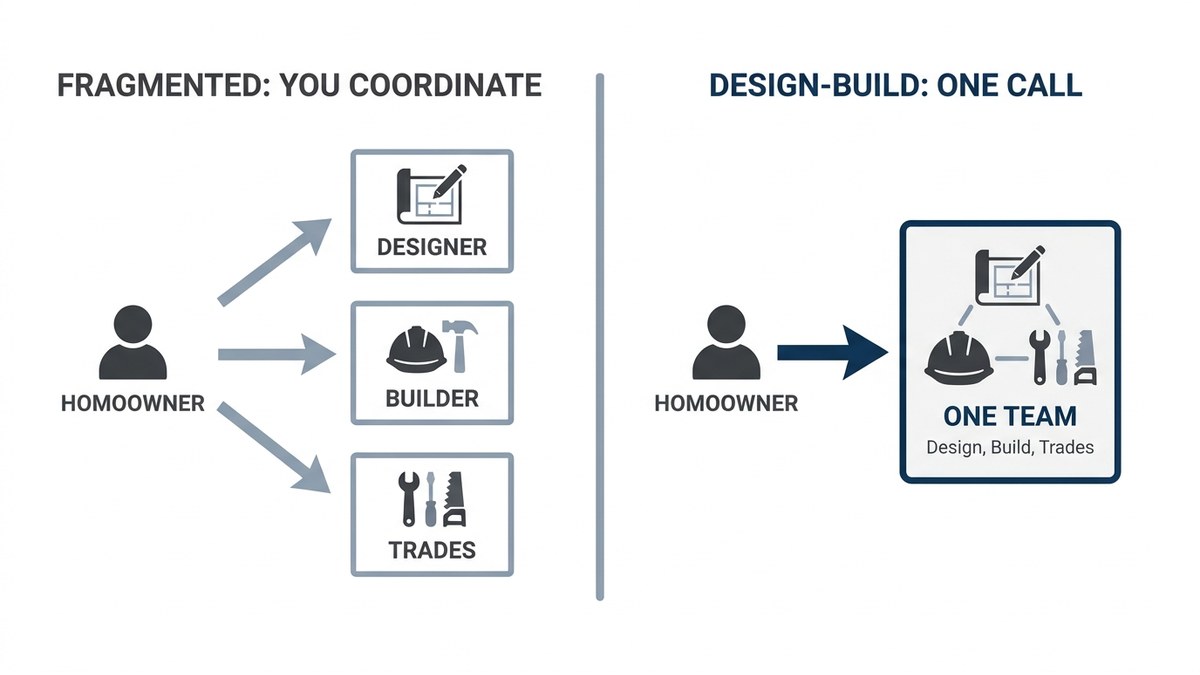
You may worry that a builder doing the design means weaker design or fewer honest checks on the plans. We answer that through how the work runs. When design and build share one team, details are settled before the first day of work, not discovered during it. Bringing the builder into design also improves buildability and gives you clearer cost information early. Whichever firm you hire, ask who designs the plans and how decisions get made. For a deeper look, read our comparison of a full-service contractor versus fragmented trades.
One team that owns the plans and the build is the one that owns the problem.
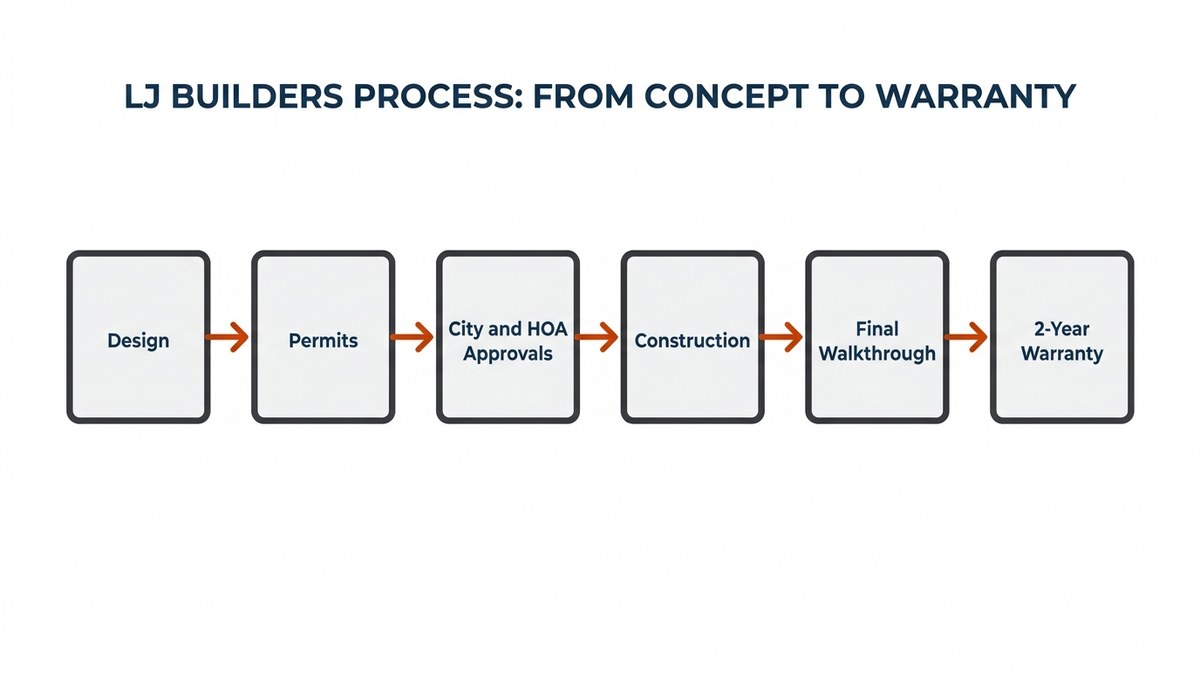
A full-service team handles design, permitting, city and HOA approvals, construction and the final walkthrough. You deal with one point of contact and one schedule, and the work is backed by one written workmanship warranty.
Here is what that looks like with us. We treat these as integrated design services, not separate jobs handed from one firm to the next:
Many East Valley neighborhoods have HOAs, and approvals can slow a project when nobody owns them. Having one team carry that work is a real advantage.
Not every addition spreads outward. If your lot has little yard to spare, read about what going up with a second-story addition involves. A casita is another option. If rentals are allowed, a properly permitted casita with separate utilities and its own entrance can make an attractive long-term rental in Chandler.
Full-service means you hand over the coordination, not just the construction.
Ask for the contractor's license number, who designs the plans, who your single contact is, what the written estimate covers, how city and HOA approvals are handled, and exactly what the warranty includes and for how long.
Use this checklist with any firm, including ours:
On the warranty, we put a 2-year workmanship warranty in writing. Many addition contractors do not offer a written workmanship warranty, or offer a shorter one. Read the document, not the promise.
Experience matters too. Our crew has more than 20 years of combined experience, and the business is run by its owners, Lawrence and Jessica. We stand behind new work and the corrections we make to other people's mistakes. Homeowners comparing firms across the metro can also read about a room addition contractor in Phoenix.
A good contractor answers all six questions in writing without hesitation.
A new contractor can assess what is already built, review the plans and permits on file, and lay out a clear path to completion. Ask for that assessment in writing before committing to a finish scope.
If this is you, you are not alone, and it is not your fault. Many of the homeowners we meet have had a contractor stop returning calls. The project sits half-finished, and you are left with questions about what is safe and what is correct.
A takeover starts with facts. We look at the existing conditions, check what plans and permits exist, and tell you what we find. Then we describe the steps to finish, in plain terms. We fix what others get wrong, and we stand behind that work too.
You do not need to decide anything during that first step. See how an addition design and build runs with our team to understand what you would be getting.
An honest assessment comes before any commitment.
Here is the decision rule. If you want to manage design and construction yourself, hire separately. If you want one contact, one schedule and one written warranty, hire one design-build team.
Either way, check the license, find out who designs the plans, and get the estimate and warranty on paper. Those steps protect you with any firm.
We built LJ Builders around the second path. Design, permits and construction sit under one owner-led team, so you are not the project manager. There is no call center and no sales pitch. You ask questions, we answer them, and you decide.
The estimate is free, and it is the lowest-pressure way to see how we work.

Commercial
A suite that looks ready on a tour can still hide plumbing, power and landlord problems. This guide covers layout, code, coordination and schedule, so your practice settles them before construction starts and keeps its opening date.

Commercial
A clubhouse or common area project succeeds or fails on coordination, not construction. This guide shows Phoenix HOA boards and property managers how to scope the work, compare written bids, protect resident access, and decide between one general contractor and separate trades.

Restoration
After fire, smoke or water damage, many Arizona owners end up with one company talking to the insurer and another quoting the repair. This guide explains who does what, what to do first, and how to choose one accountable team.